Who Zhong Kui is
Zhong Kui is one of the most recognisable figures in Chinese folk religion and almost unknown outside it. He is the demon queller: a dead scholar, appointed by the king of the underworld to hunt ghosts, painted onto doors at New Year, and invoked in folk medicine, opera and, now, video games.
He is not a god in the way that, say, Guan Yu is a god. He has no temple network that rivals the great deities and no canonical scripture. What he has is ubiquity: for centuries, a picture of Zhong Kui hung on a door was the cheapest and most common form of household protection in China, and his face in opera is one of the most instantly readable in the repertoire.
The story in one paragraph
A scholar of great ability and terrible appearance passed the imperial examination at the highest level. When the emperor saw him, he withdrew the honours. Zhong Kui killed himself on the palace steps in protest. In the afterlife, the king of the underworld recognised both the injustice and the talent, and gave him a post: commander of ghosts, with authority to seize any spirit that troubled the living. He appears to Emperor Xuanzong in a dream, captures the demon that has been tormenting him, and is rewarded with a portrait painted by Wu Daozi — which is how the image entered Chinese art.
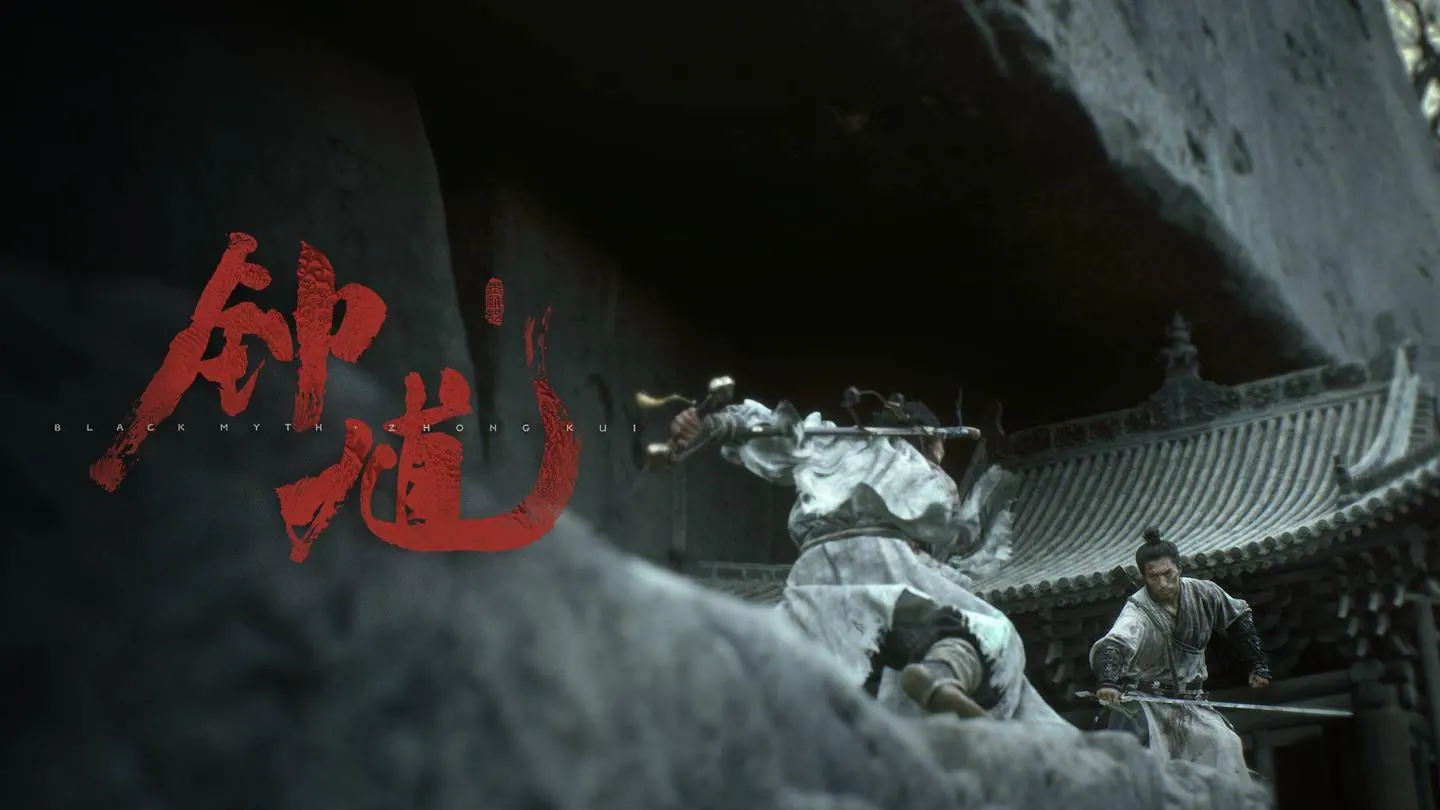
Why he matters for the game
Game Science is not adapting a plot; it is borrowing a cosmology. The Zhong Kui legend supplies three things that are unusually well suited to an action RPG:
- A job. Zhong Kui is a civil servant of the dead. His authority is bureaucratic, not divine, which means the world can be full of rules, paperwork, ranks and corruption — and a protagonist can be an employee rather than a chosen one.
- An inventory of ghosts. Chinese folklore around Zhong Kui is full of named spirits, each with a story and a weakness, which is exactly what a boss roster needs.
- A visual language. The bulging eyes, the black beard, the sword, the bat, the official's robe — these are design assets that have been refined for a thousand years.
The four things to know
If you only remember four facts about Zhong Kui, make them these:
- He failed upwards. His death was a protest against a decision he considered unjust, and his reward came after it.
- He is a bureaucrat. He does not destroy ghosts; he arrests them. The sword is an instrument of office.
- He is seasonal. New Year's Eve is his night: his picture goes up on the door, and comes down after the festival.
- He is ugly on purpose. The ugliness is the point of the story. It is what the emperor could not bear, and it is what makes him frightening to ghosts.
Where to read next
- The legend and its sources — the Tang dynasty, the dream, the painting, and the earliest written references.
- Folk customs — New Year doors, the Five Poisons of Duanwu, regional Zhong Kui dances, and how the figure travelled to Japan.
- Reading the image — what each attribute means, from the bat to the umbrella.
- Story and setting of the game — how Game Science is using all of this.