The short version
Black Myth: Zhong Kui is set in the world of the Zhong Kui legend: Tang-dynasty China, where a wronged scholar was appointed by the emperor of the underworld to hunt ghosts. The game is not a retelling of that story. It uses it as a foundation, the way Wukong used Journey to the West — taking the characters and the cosmology, then building something new on top.
Game Science has released no plot summary, no character list and no chapter structure. Everything below is either from the legend itself or from what the gameplay footage shows.
The legend it borrows from
Zhong Kui was a scholar of extraordinary ability and unfortunate appearance. He passed the imperial examination at the highest level, had his honours withdrawn because the emperor could not bear to look at him, and killed himself on the palace steps in protest. In the afterlife he was given a post: commander of the ghosts, answerable only to the king of the underworld.
The most famous version of the story has him appear in Emperor Xuanzong's dream, chase down a demon that had been tormenting the emperor, and be rewarded with a painted portrait by Wu Daozi — which is how he entered Chinese visual culture as the fierce, bearded figure painted on doors at New Year.
For the full account and its sources, see the Zhong Kui legend.
What the demo shows of the world
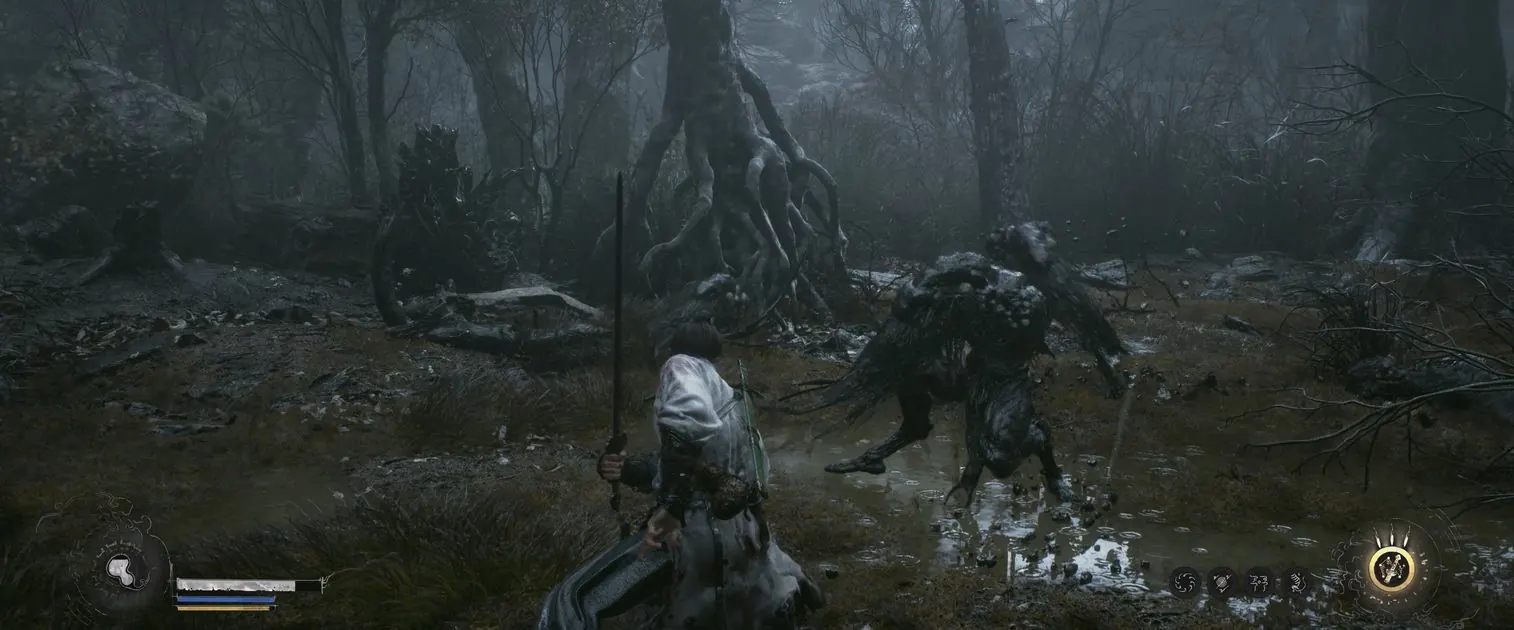
The fifteen-minute gameplay demo is a continuous slice through what looks like one region:
- A village in the rain. Timber houses, mud, lanterns, and a population that is mostly absent or hostile.
- A flooded swamp. Reed water, drowned structures, and enemies that use the water as cover.
- A temple interior. Painted walls, hanging charms, and a boss arena built around a hinged shell.
- A road at night, ending with a tiger. The final shot of the demo, and the only one that feels like a promise about the story rather than the combat.
Nothing in the footage is bathed in sunlight. Wukong's marketing sold scale and brightness; this sells intimacy and dread.
Who you play
The protagonist is a young man in white robes who fights with a sword. He does not appear to be Zhong Kui — the figure on the tiger at the end might be.
The leading fan theory is that the player character is Du Ping, Zhong Kui's sworn brother in the legend, the man who buried him and later married his sister. The theory gained traction in October 2026 when art director Yang Qi posted a photograph of a clay sculpture that fans read as a younger, human version of a character from the myth. Game Science has not commented.
If the theory is right, the emotional shape of the game is unusual for the genre: you would be playing the witness, not the legend — the man who survives Zhong Kui and has to live in the world his death created.
How it connects to Black Myth: Wukong
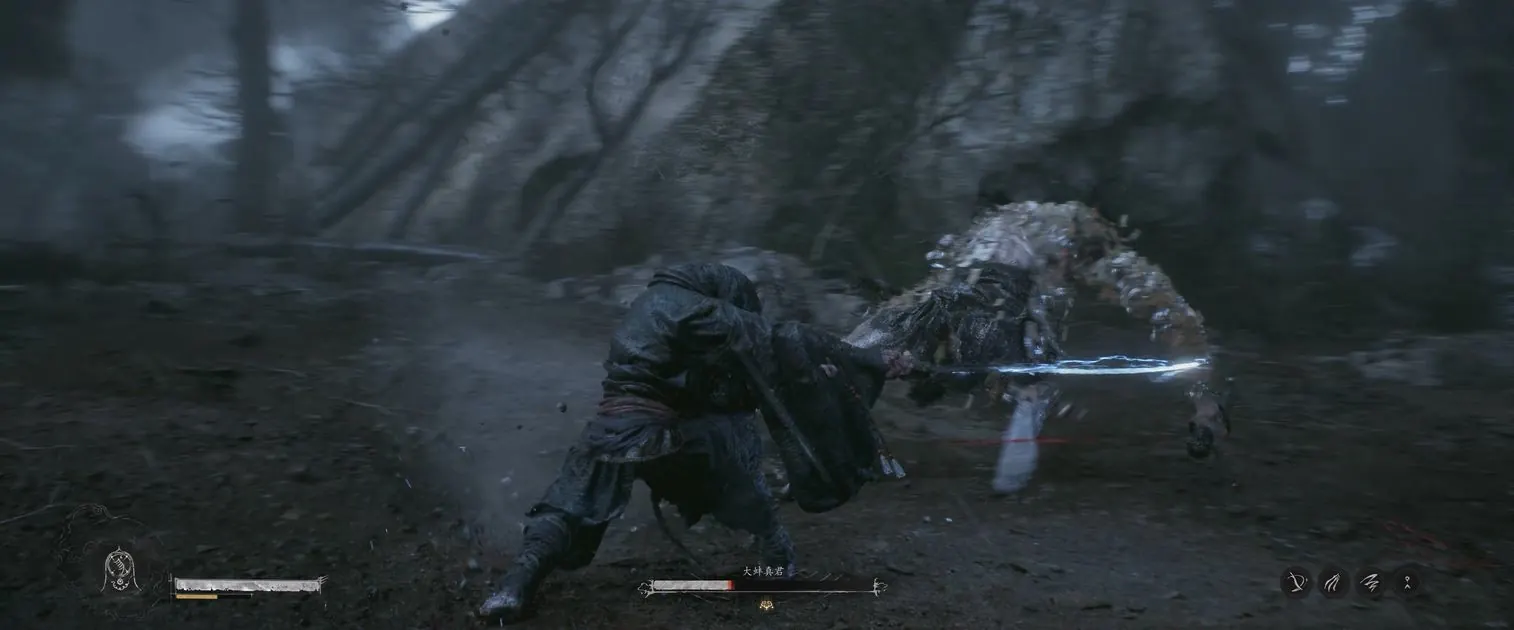
Officially, it does not. Game Science has said this is not a sequel and does not continue Wukong's story, and the two games draw on different source material with different protagonists.
What they share is a production philosophy: a Chinese myth retold at AAA scale, with a heavy emphasis on real architecture, real folklore and hand-built assets. The studio has said it deliberately avoids AI-generated content in design and asset work, and the shared "Black Myth" name — after the August 2026 account rename — positions the games as an anthology rather than a franchise.
What we still do not know
Whether the game has chapters like Wukong, whether it is open or linear, how long it is, and how much of the legend it actually dramatises. The demo was chosen to show combat, not structure, and the studio has been careful not to promise anything it has not shown.
For the dates we do have, see the Black Myth: Zhong Kui timeline.